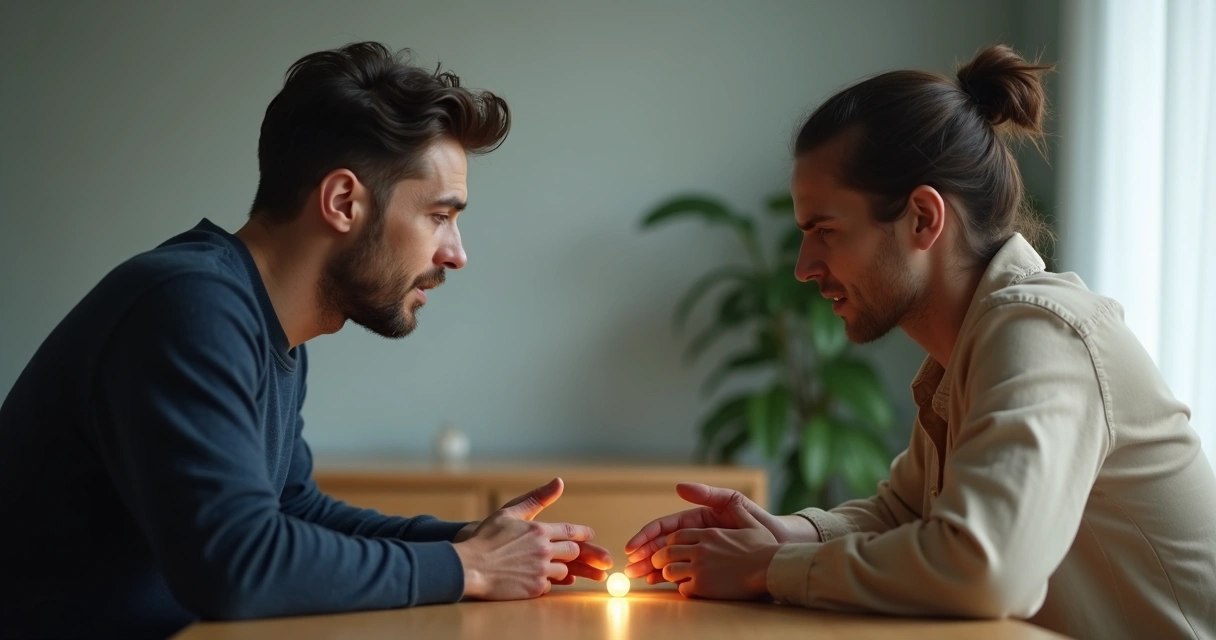
Conflict rarely gives us a warning. It starts in a meeting, over dinner, in a text message, or in the quiet shift of someone’s tone. Then our body reacts before our mind can catch up. We tense, defend, explain, interrupt, or shut down.
In our experience, what changes the course of conflict is not a perfect script. It is a brief return to presence, right in the middle of heat.
Micro-moments of presence are short pauses in which we return to awareness before reacting.
These moments may last two seconds or twenty. That is enough to soften the automatic impulse and create space for a wiser response. We do not need to leave the room, become emotionless, or solve everything at once. We only need to come back to ourselves, little by little.
That may sound simple. It is. But simple is not the same as easy.
Why small moments matter in tense situations
When conflict rises, our attention narrows. We stop listening well. We begin to prepare counterarguments. We read threat into words that may be clumsy, tired, or fearful rather than hostile. Presence widens that narrow frame.
We have seen this often. A person starts to answer quickly, then notices a clenched jaw, takes one breath, and says, “Give me a second.” That one second changes the whole tone of the exchange.
Presence interrupts reflex.
There is growing public openness to brief contemplative practices. According to data on meditation and mindfulness from the NCCIH, meditation practice among U.S. adults rose from about 7.5% in 2002 to 17.3% in 2022. We see this as a sign that more people are learning to value inner steadiness, even in ordinary life.
Research also points in a clear direction. In an experience-sampling study with about 3,800 observations, higher momentary mindfulness was linked to lower intensity in everyday inner conflicts. In plain terms, when people were more present and less judging in the moment, the struggle between impulse and deeper intention eased.
Conflict outside us becomes harder to manage when conflict inside us is already running the show.
What blocks presence during conflict
Before we build new habits, we need to see what gets in the way. Most people do not lose presence because they are weak. They lose it because old patterns move fast.
Common blockers include:
The urge to win rather than understand.
The fear of being judged, rejected, or ignored.
Stored emotional pain that gets activated by tone, silence, or criticism.
Mental overload, lack of sleep, and accumulated stress.
Sometimes the real fight is not with the person in front of us. It is with what their words awaken in us. A late reply may feel like disrespect. A raised voice may feel like danger. A disagreement may feel like abandonment. If we do not notice this inner layer, we react to more than what is happening now.
How to build micro-moments in real time
Micro-moments of presence work best when they are concrete. We cannot rely on vague advice in a live argument. We need small actions that fit inside daily life.
We suggest a sequence that is easy to recall under pressure.
Notice the body first
The body usually knows before the mind admits it. Heat in the face, tight chest, dry mouth, restless hands, rigid shoulders. These are not problems. They are signals.
The body is often the first doorway back to presence.
When we notice a physical cue, we can silently name it: “My chest is tight.” “My throat is closed.” This naming helps us step out of total fusion with the reaction.
Shorten the pause
Many people think presence needs a long break. In conflict, that belief becomes an excuse. A pause can be very brief and still be real.
Try one of these:
Take one slower exhale.
Feel both feet on the floor.
Relax the tongue and jaw.
Look at one object in the room for one second.
These are small resets. They lower reactivity just enough for choice to return.

Use grounding words
Inner language shapes outer behavior. A few grounded phrases can stop escalation before it spreads.
We often suggest lines like:
“Let me slow down for a moment.”
“I want to answer with care.”
“I feel charged right now.”
“Help me understand what you mean.”
These phrases do not make us passive. They make us present.
Practices that prepare us before conflict begins
Micro-moments during conflict become easier when we train attention outside conflict. We do not rise to the level of our ideals. We fall to the level of our practice.
A useful rhythm can be very modest:
One minute of stillness before opening messages in the morning.
Three conscious breaths before difficult conversations.
A brief check-in at lunch: “What am I carrying right now?”
Two minutes of reflection at night on one moment of reactivity and one moment of presence.
We have found that short daily practice builds familiarity. Then, in a hard moment, presence feels less foreign.
There is also value in preparing language ahead of time. If a certain relationship often triggers us, we can rehearse calm phrases while we are steady. That is not artificial. It is wise preparation.
What presence does not mean
Presence is not silence at any cost. It is not agreeing with harmful behavior. It is not suppressing anger until it becomes cold distance.
Presence means staying connected to awareness while we speak truth.
We can be clear and kind. Firm and calm. Honest and measured. This balance takes practice, and sometimes we miss it. That is part of learning.
We still recall a conversation in which one of us felt unfairly accused. The first impulse was to interrupt and correct every detail. Instead, there was a pause. A sip of water. One breath. Then a different sentence came: “I want to respond, but first I want to make sure I heard your concern.” The content of the conflict did not vanish. Yet the emotional field changed at once.
Pause first. Speak second.

Conclusion
We do not need flawless calm to face conflict well. We need access to brief returns. A breath. A softened jaw. A grounded sentence. A second of honest awareness.
That is how micro-moments of presence grow. Not through grand gestures, but through repetition in real life. In our view, every conflict gives us two paths. One repeats the old pattern. The other begins with a pause.
If we keep choosing that pause, even imperfectly, our responses become less driven by fear and more guided by clarity. Over time, conflict stops being only a place of rupture. It can also become a place of maturity.
Frequently asked questions
What are micro-moments of presence?
Micro-moments of presence are very short pauses of awareness during daily life. In conflict, they help us notice thoughts, emotions, and body reactions before we respond. They can last only a few seconds and still shift the direction of a conversation.
How to stay present during conflict?
We stay present during conflict by returning to simple anchors. One slow exhale, feeling the feet on the floor, relaxing the jaw, and naming what we feel can help. Clear phrases such as “I need a moment” also support steadiness without avoiding the issue.
Why is presence important in conflict?
Presence matters in conflict because it reduces automatic reactions. When we are present, we listen better, speak with more care, and make room for understanding. This lowers escalation and supports responses that match our values rather than our first impulse.
Can micro-moments help resolve arguments?
Yes, micro-moments can help resolve arguments because they interrupt the reactive cycle. They do not erase disagreement, but they create enough inner space for calmer speech, better listening, and less defensive behavior. That often makes resolution more likely.
What are the best tips for presence?
The best tips are to train brief awareness daily, notice body signals early, use one-breath pauses, speak a little slower, and keep a few grounding phrases ready. It also helps to reflect after conflict, so we can learn which cues and practices support us best.