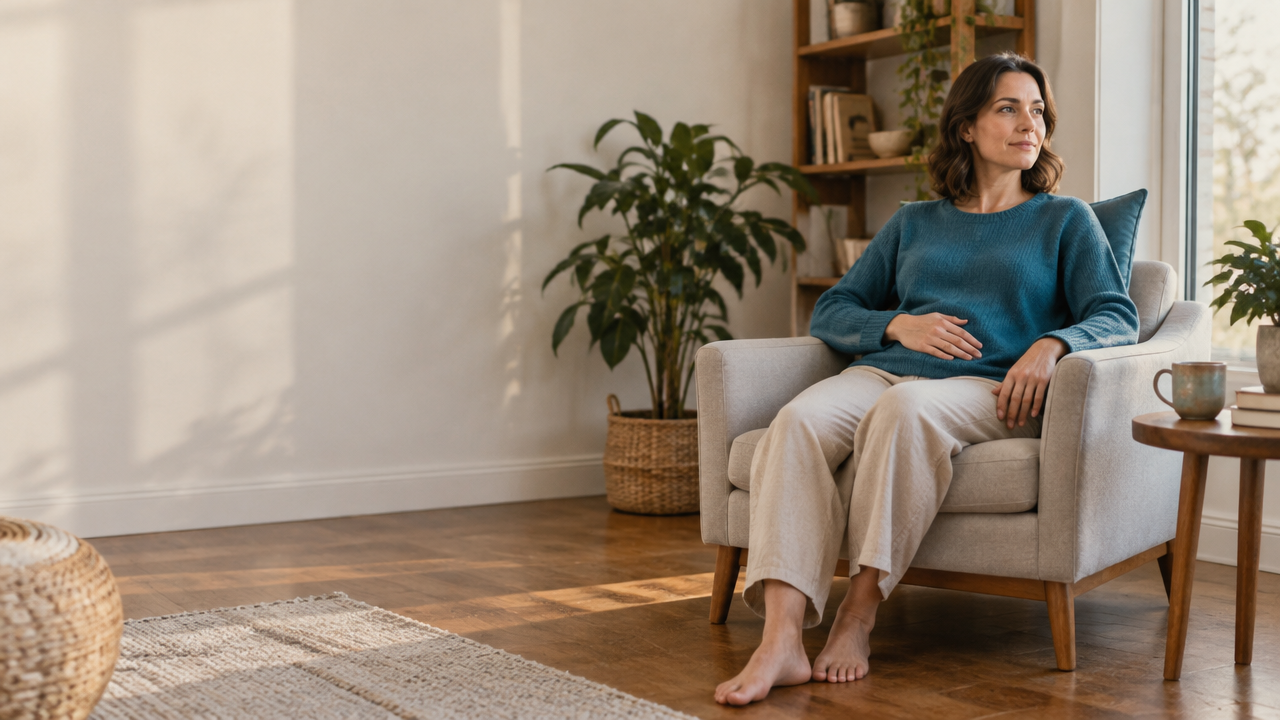
Nervous system regulation is the ability to respond to stress and gradually return toward steadiness, not a switch you can force into the “off” position. If you feel tense, scattered, shut down, or slow to recover after pressure, start with small cues of safety and choice. The most useful practice is the one that feels tolerable and helps you engage with the next moment.
Key points to remember
- Stress responses are normal; regulation means flexibility, not constant calm.
- Grounding, comfortable breathing, gentle movement, and supportive contact are practical starting points.
- A technique should feel manageable. Stop or adjust it if it increases distress.
- Persistent or disruptive symptoms deserve professional attention, not just another self-help exercise.
What does nervous system regulation actually mean?
Regulation describes how the body and mind respond to demands, then recover enough to think, connect, rest, or act. The autonomic nervous system helps manage functions such as heart rate and breathing. Its activity changes with context, so a raised heartbeat during a challenge is not automatically a problem.
The common “gas pedal and brake” metaphor can be useful, but it oversimplifies a system with many interacting processes. A more practical goal is to build flexibility: notice what is happening, use a supportive action, and regain enough steadiness to choose what comes next. This is different from demanding that every uncomfortable feeling disappear.
The National Center for Complementary and Integrative Health explains that stress can affect the body, while relaxation practices may support a relaxation response. Its overview of stress and the relaxation response also notes that persistent stress symptoms may warrant professional help. For a broader view of recurring stress patterns, explore these tools for high stress cycles.
Which signs suggest you may need a grounding pause?
A pause may help when you notice a strong stress response that is making it harder to stay present. People describe signs such as shallow or rapid breathing, a clenched jaw, racing thoughts, restlessness, numbness, or difficulty concentrating. These experiences are not a diagnosis, and they can have many possible causes.
Instead of labeling yourself “dysregulated,” identify what you can observe: “My shoulders are tight,” or “I am having trouble focusing.” That description is specific and leaves room to respond with care. Sensory awareness can make emotional cues easier to notice; this guide to mapping sensations and emotions offers a related reflection practice.
Also ask whether the feeling is linked to an immediate situation, ongoing pressure, lack of rest, or something else. A symptom pattern that is new, severe, persistent, or interfering with daily life is a good reason to speak with a health professional rather than assuming stress is the only cause.
How can you feel more grounded in a few minutes?
Use a short sequence that restores orientation and choice. You do not need to complete every step or achieve a particular feeling. Try this for one to three minutes, then decide whether to continue, switch practices, or return to your task.
- Look outward: With eyes open, slowly notice three ordinary objects around you. Let your gaze rest on each one.
- Notice support: Feel the chair beneath you or the floor under your feet. Press gently, without straining.
- Choose a breath: If comfortable, breathe naturally and let one or two exhales become slightly longer. Do not hold your breath or force a deep inhale.
- Add easy movement: Roll your shoulders, stretch your hands, or take a slow walk while noticing your steps.
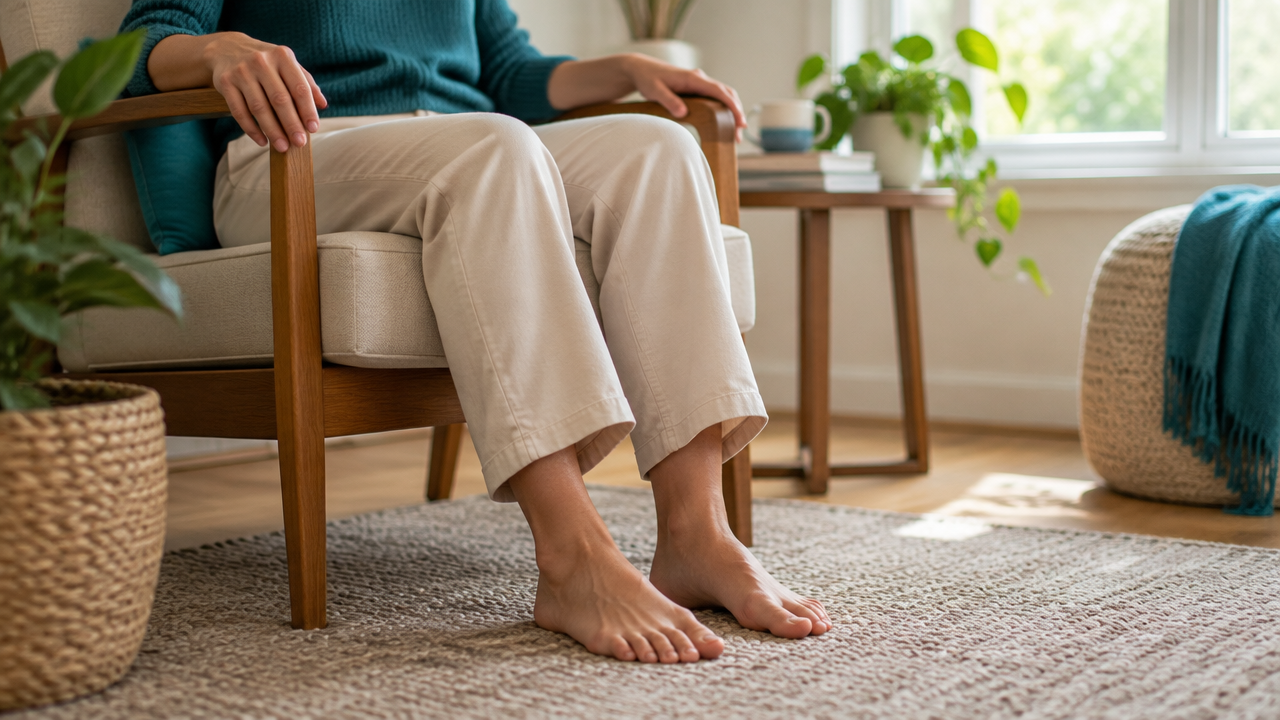
Not everyone finds inward attention or breathwork calming. Keeping your eyes open and focusing on the room, a familiar sound, or gentle movement may feel more manageable. A collection of grounding rituals for emotional steadiness can help you identify options that fit your everyday life.
Do breathing and relaxation exercises work for everyone?
No single technique works for every person or situation. The NCCIH says research on relaxation approaches varies by practice and condition. It describes a 2019 review of three studies involving 880 participants as preliminary evidence that diaphragmatic breathing may help reduce stress. That is promising, but it is not proof of a universal or immediate effect.
Keep the practice gentle. Sit comfortably, breathe at an easy pace, and stop if you feel dizzy, panicky, or more unsettled. You can switch to looking around or walking instead. The NCCIH also advises that relaxation approaches should not replace conventional care or delay a medical visit. Its guidance on relaxation techniques for stress discusses both possible benefits and limits.
Regular practice can be a useful experiment, not a test of discipline. Try a brief pause at a predictable point in the day, such as after work, and note whether it helps you feel more present. If reflective practice suits you, meditation practices for everyday stress offer another way to develop awareness without treating calm as a performance.
When should you seek help instead of relying on self-regulation?
Get professional support if distress persists, grows more intense, or regularly disrupts sleep, relationships, work, or everyday responsibilities. A clinician can help explore possible causes and discuss treatment options. Self-guided techniques may complement care, but they cannot determine whether a symptom has a medical or psychological cause.
Long-term pressure can also be shaped by workload, relationships, health, or repeated patterns of behavior. Noticing those conditions may be more useful than trying to calm yourself in the same environment again and again. These early signs of systemic burnout can help frame a wider reflection, but they are not a substitute for assessment.
If you are in immediate danger or considering harming yourself, contact emergency services or a crisis support service in your area. You deserve support that matches the situation, not pressure to manage everything alone.
Frequently asked questions
How can I calm an overactive stress response?
Try a small, comfortable action rather than forcing yourself to feel calm. Look around and name a few things you see, feel your feet supported, or walk slowly while noticing each step. If breathing feels comfortable, let the exhale lengthen slightly. Stop or choose another method if a practice makes you feel worse.
What are signs your body is staying on high alert?
Possible signs include persistent muscle tension, racing thoughts, trouble sleeping, feeling unusually alert, or difficulty settling after a stressful event. These experiences can have many causes and do not, by themselves, prove that your nervous system is dysregulated. Consider how long they last and whether they interfere with daily life.
How do you calm a dysregulated nervous system?
Start by orienting to your surroundings and choosing one gentle cue of support, such as sitting with both feet on the floor. Then try comfortable breathing or light movement for a minute or two. Regulation is not a guaranteed reset, and you can stop if an exercise increases distress.
How long does it take to feel more regulated?
There is no reliable fixed timeline. Some people notice a brief shift after one grounding practice, while steadier changes may require repeated practice and attention to ongoing stressors. If distress or physical symptoms persist, worsen, or disrupt daily activities, seek guidance from a qualified health professional rather than waiting for a particular deadline.
When should you seek professional support for stress symptoms?
Seek professional support when stress symptoms persist, worsen, or interfere with sleep, work, relationships, or daily tasks. A clinician can help assess possible causes and discuss appropriate care. Relaxation practices may support wellbeing, but they should not replace medical or mental health treatment or delay an evaluation for concerning symptoms.