


Team conflict is a topic most of us approach with unease. We tend to think of it as a clash between personalities, a matter of miscommunication, or an unfortunate side effect of high pressure. In our experience, these explanations only scratch the surface. Most conflict among teams is deeply shaped by what we call systemic patterns, invisible forces that move below the level of individual intention or awareness.
Team conflict is rarely random; it almost always follows the invisible lines of a system at work. If we want to address team conflict in a real and sustainable way, we must learn to spot these patterns and understand their roots.
What are systemic patterns in team conflict?
First, let’s clarify what we mean by a “systemic pattern.” In any team, there is more at play than individuals alone. There are shared histories, unwritten rules, and repeating cycles. These forces shape how team members interact and react, even when no one is aware of them. Systemic patterns can be described as sets of dynamics that guide behavior and communication within the group, rooted in:
- Shared beliefs and unspoken assumptions
- Past experiences, both personal and collective
- Family or organizational culture habits brought from outside
- Hidden loyalties and alliances, some conscious, some not
- Role expectations and power balances
These patterns often work like a current below the surface. Over time, if not acknowledged, they repeat themselves, causing the same types of conflicts even as the faces around the table change.
What is ignored persists.
Where do these patterns come from?
We find that almost every system, whether a family, a group of friends, or a team at work, has a kind of “memory.” Patterns form when certain issues are pushed aside or not processed openly. This can happen in many ways:
- A disagreement years ago that was never fully resolved
- Competing values left unspoken (for example, one member values speed, another values caution)
- Unclear boundaries about who is responsible for what
- Expectations that nobody actually wants to carry, but no one is willing to question
- Repeated scapegoating or exclusion of a team member
As these moments pile up, the team’s collective “memory” starts driving behavior. People find themselves responding, over and over, to something that might not even be happening right now. Instead, they are reacting to the system’s invisible past.
How systemic patterns show up in real teams
It is tempting to see conflict as an isolated argument or as “someone’s” problem. In reality, most visible conflicts are only the tip of the iceberg. Here are some of the ways we see systemic patterns play out:
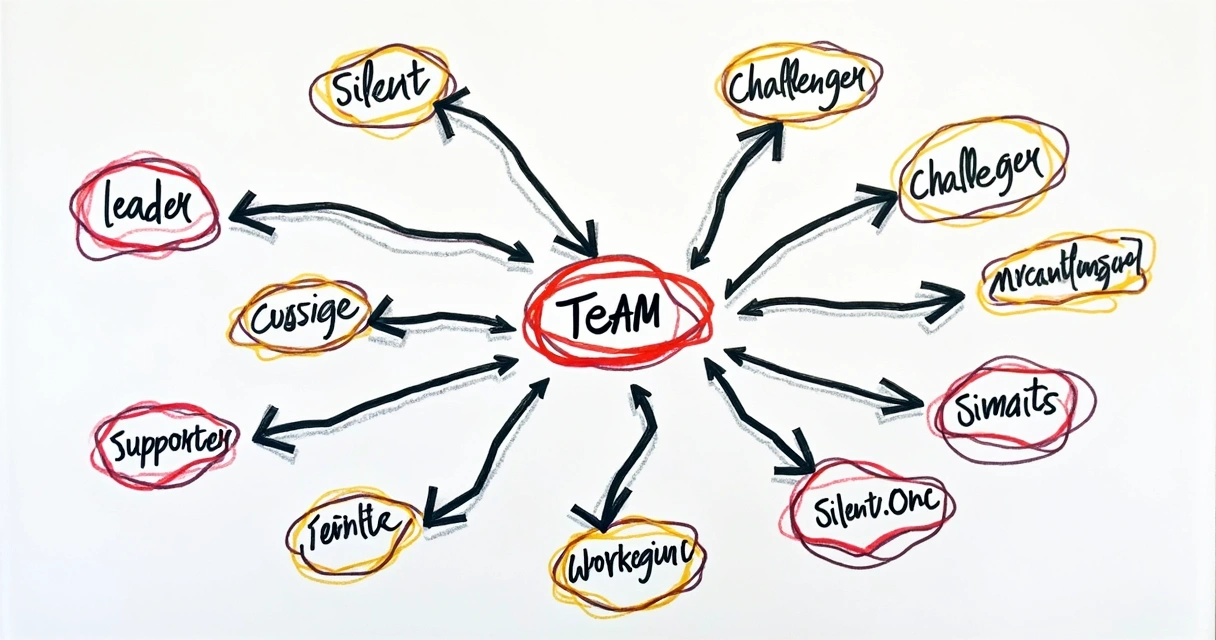
- Unchanging roles: Some team members always end up as the peacemaker, the challenger, or the silent one, no matter the topic.
- Repeating scenarios: The same disagreements, between different people, across projects or meetings.
- Hidden alliances: Decision-making starts splitting into camps, sometimes silently, sometimes out in the open.
- Blame cycles: Accountability bounces from person to person, but the real issue is never addressed.
- Emotional “temperature” swings: The group atmosphere shifts dramatically after certain topics or names are mentioned, even if no one says anything out loud.
When patterns like these start copying themselves, it is usually not anyone’s choice. The pattern has become bigger than the people living it.

Why awareness is the first step to change
The first step to resolving recurring team conflict is learning to see the patterns beneath the surface. Most people are so focused on visible problems, arguments, underperformance, lack of participation, that they rarely pause to ask, “What invisible force is driving this?”
We have found these questions helpful to begin uncovering the hidden layers:
- Are we seeing the same theme appear with different people over time?
- Does someone always get assigned the same role or blame?
- What is not being talked about, but feels very present in the room?
- Is there unresolved history, either between current members or connected to someone who left?
By asking questions like these, we begin mapping what lives in the system. Often, people share a sense of relief just from having a pattern named out loud.
Breaking the cycle: practical steps for teams
If you suspect that your team’s conflict is more than just people “not getting along,” you are probably right. So how do we take real action that moves the team forward?
- Slow down the reaction: When conflict appears, encourage a pause. Name what is happening. “This feels familiar. Have we been here before?”
- Invite many voices: Make space for quieter team members to describe what they are noticing in the group. Sometimes, a pattern breaks just because it is seen from a new angle.
- Map the roles: Identify the unspoken roles everyone takes on over and over. Does someone always “save the day”? Is there always a scapegoat?
- Address unresolved past events: If there are old wounds, name them respectfully and invite reflection. The past loses power when brought into the open.
- Clarify responsibilities and values: Are expectations understood and freely agreed upon, or are some inherited without question?
- Strengthen connections: Regular meetings for honest conversation (not just project status) can build the trust needed to surface and shift long-held systemic patterns.
In our experience, the teams that grow most are those willing to see themselves as a living system, not just a collection of separate individuals.
Why the “quick fix” approach never works
Many conventional approaches to conflict resolution focus on surface-level interventions: new rules, feedback forms, a team outing. These may offer short-term relief, but if systemic patterns are ignored, the same issues will resurface with new faces or after a few months.
Real transformation comes from naming, understanding, and shifting the group’s underlying patterns, not just managing the symptoms. This takes patience, courage, and sometimes uncomfortable honesty. But the reward is a team that learns and grows together, rather than repeating the same unresolved story.
Conclusion
Team conflict does not need to be an endless loop. When we recognize the presence of systemic patterns, we can start to address the root causes rather than just the noise on the surface. Most teams, when given the opportunity, want to move forward from these cycles and develop a way of working that honors both the individual and the collective. The invitation is to look beyond what is immediately visible and start listening for the messages your team’s system is sending.
Frequently asked questions
What causes conflict in teams?
Conflict in teams often arises from differences in personalities, unspoken expectations, unclear roles, or misaligned goals. Systemic patterns, such as past unresolved events or hidden group loyalties, can also fuel ongoing tension.
How to spot systemic conflict patterns?
Look for repeating scenarios, unchanging roles, and cycles of blame or exclusion that persist regardless of who is involved. Pay attention to topics that make the group uncomfortable or to reactions that seem out of proportion.
What is a systemic team conflict?
A systemic team conflict is a repeated issue within a group that stems from underlying patterns, such as collective beliefs, unresolved history, or power dynamics, rather than only from the actions of individuals. These conflicts tend to recur and resist simple solutions.
How can leaders handle team conflict?
Leaders can start by creating space for open conversation, naming patterns, and encouraging reflection on team roles and history. They should address psychological safety, clarify values and responsibilities, and support learning together, instead of relying only on quick fixes.
Are team conflicts always harmful?
No, team conflicts are not always harmful. When approached with curiosity and openness, conflict can help teams grow by uncovering hidden issues, clarifying group values, and strengthening trust and connection.