

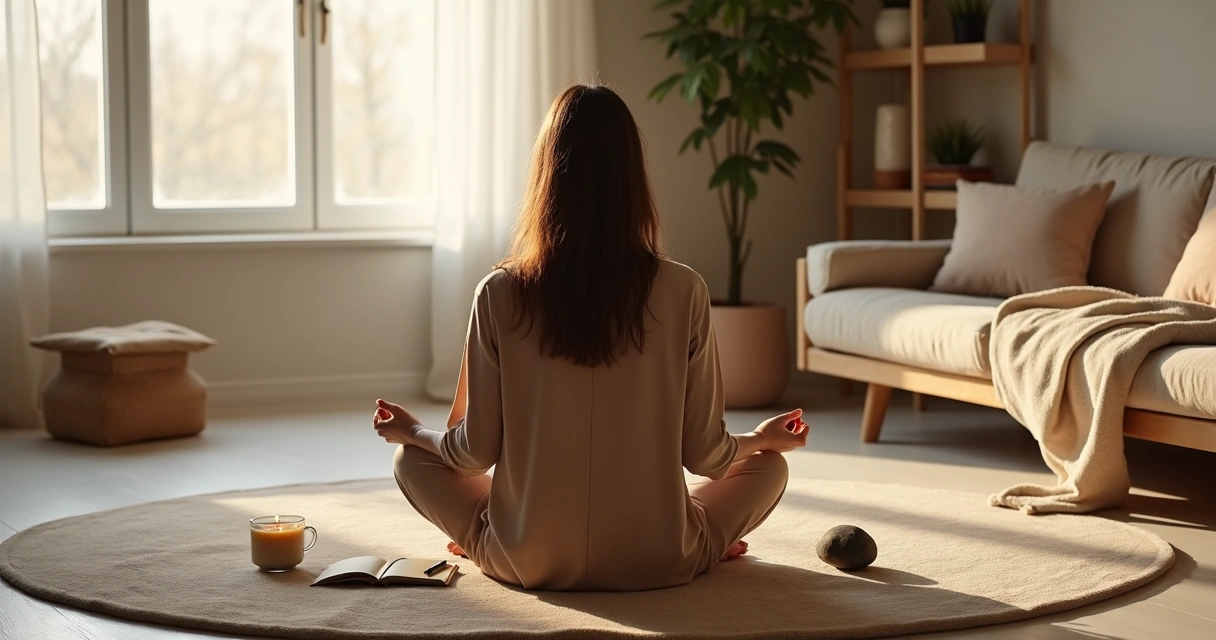
Daily life often pulls us in different directions, testing our emotional balance. We believe in the value of grounding practices. They help anchor us, steady our emotions, and offer space for thoughtful responses instead of quick reactions. Having tested these approaches in real life, we have seen how such small rituals can shape a calmer and more stable inner world. Below, we share ten personal rituals that support grounding and emotional stability, inviting you to try those that resonate most with your needs or lifestyle.
Morning mindful breathwork
Starting the day with conscious breathing sets the tone for grounded energy. We suggest sitting upright with feet flat on the floor, gently closing the eyes, and focusing attention on the sensation of the breath. Inhale deeply for four seconds, hold for four, exhale for four, and pause for four seconds before inhaling again—this is known as box breathing.
One slow, intentional breath can change the direction of your day.
With repetition, mindful breathwork cultivates awareness, releasing tension even before the day’s pressures begin. We advise doing this for three to five minutes each morning to steady both mind and body.
Feet on the earth practice
Physical connection to the ground helps in feeling rooted and present. We often recommend stepping outside, removing shoes, and standing barefoot on soil, grass, or sand. Focus on the sensations—the temperature, texture, and firmness beneath your feet. This contact offers a wordless reassurance: we are supported.
You may wish to close your eyes and picture roots growing from your feet into the earth, drawing in calm and stability.

Intentional hydration pause
Water nourishes and grounds. We like to turn the act of drinking water into a short ritual. Hold the glass, observe the clarity, feel the coolness, and drink slowly. With each sip, focus on the refreshing sensation and mentally note how this small action nurtures your system.
This is a moment for the body and mind to meet in stillness.
We find that a dedicated hydration pause helps bring awareness back from scattering thoughts or stressful triggers.
Midday digital disconnection
Technology fragments our attention. For grounding, we recommend carving out a few minutes daily to power down devices—no notifications, messages, or scrolling. Use these minutes to sit, stretch, or gaze calmly out a window, noticing light, movement, or the world around you.
Even a five-minute digital break at lunch can clear the mental “static,” restoring clarity and a sense of personal space.
Mindful movement
Conscious movement grounds unsettled energy. This doesn’t need to be formal exercise. Gentle stretching, swaying, slow walking, or even rolling the shoulders and neck can help. Move slowly, noticing the physical sensations, tight or tense areas, and moments of release.
The intention here is not performance, but presence. This kind of movement supports emotional regulation and brings our focus back into the present moment.
Evening reflection journal
Reflection allows us to process emotions and recognize patterns. We suggest keeping a small journal near your bed. Before sleeping, write three sentences about your mood, what felt grounding, or moments of gratitude.
A few honest lines can shift your perspective and create a sense of closure.
Reflection can untangle worries and lead to restful sleep, reinforcing stability before another day begins.
Nature observation breaks
The natural world offers instant grounding. We recommend pausing to observe nature—watch clouds move, listen to a bird’s song, or study the slow opening of a flower.

A few minutes spent with nature—outdoors or through a window—helps slow racing thoughts and foster emotional steadiness.
Personal intention statement
Setting a simple intention anchors our sense of self. Each morning or before a demanding task, we find value in pausing and repeating a personal grounding statement out loud or silently. This could be, “I am steady. I am here,” or another sentence with personal meaning.
A clear intention serves as an anchor when emotions fluctuate.
By choosing your words with care, you define your direction for the day—no matter what unfolds.
Restorative touch
Soothing touch reduces stress. Placing a hand over the heart or gently massaging the temples for a minute can activate calming responses. While simple, these gestures increase awareness of the body’s needs and can offer quick relief from anxiety.
Some prefer to rub their palms together and cup them over their face, breathing in warmth and calm.
Hands remind us we belong to ourselves.
Engaging the sense of touch is a gentle way to feel immediately more stable.
Simple closing ritual for the day
To create emotional stability, we benefit from clear transitions. At night, we advisedly set aside two to three minutes to signal closure to the mind and body. Some individuals quietly dim the lights, listen to a favorite calming sound, or softly state, “Today is complete.”
This closing ritual separates the demands of the day from rest, supporting smooth transition into sleep.
Bringing rituals into everyday life
In our view, rituals anchor us in reality and grant us space to respond rather than react. They build emotional stability by making self-care consistent and accessible. By picking a few practices that suit you, these moments can contour your day, lending shape to even the most unpredictable times.
Grounding rituals are not escape—they are foundations.
Routine offers safety, clarity, and a renewed sense of connection, whether practiced in private or shared with others.
The conclusion: Simple steps, steady roots
Grounding and emotional stability do not rely on dramatic changes. Small, repeated personal rituals have lasting impact. By pausing, breathing, reflecting, and moving mindfully, we learn to meet our emotions with steadiness rather than resistance. The ten rituals we outlined offer a practical path to stay present and calm, even when life’s pace intensifies.
In our research and experience, it’s not about perfect routines. It’s about honest moments—reminding ourselves each day that calm is possible and stability can be practiced.
We invite you to establish a few gentle rituals that feel right for you. The power of grounding lies in the practice, not in the theory. True stability grows with every small step.
Frequently asked questions
What is a grounding ritual?
A grounding ritual is a repeated personal action that connects us to the present moment, our bodies, and the physical world. These rituals can be simple acts like mindful breathing, walking barefoot, or pausing to observe nature. Their goal is to help us feel steady and secure, no matter what is happening around us.
How can rituals help emotional stability?
Rituals provide structure, predictability, and a sense of control. In our experience, having regular practices helps reduce emotional overwhelm and fosters a calm mindset. Rituals act as signals for the mind and body, indicating when to slow down, reflect, or reset. Over time, they build resilience, making it easier to handle stress and emotional challenges.
Which rituals are easiest to start?
We find that mindful breathing, intentional hydration pauses, and digital disconnection breaks are the simplest rituals to begin with. These do not require special tools or much extra time. Even just one or two minutes can make a noticeable difference. Choose one ritual that feels comfortable, and practice it daily for best results.
How often should I practice grounding rituals?
You can practice grounding rituals as often as needed. We recommend including a few in your daily routine—morning, midday, and evening are natural anchor points. However, if you feel anxious, distracted, or emotionally unsettled during the day, even a brief ritual can help restore stability. The more you repeat them, the more effective they become.
Are grounding rituals worth trying?
We believe grounding rituals are worthwhile because they foster calm, clarity, and emotional resilience in daily life. They are accessible to anyone and can be easily adapted to fit personal circumstances. By committing to small rituals, you give yourself regular opportunities for inner balance, regardless of outside pressures.